

District 7 Platform

Why I Am Prepared to Do This Work
I have lived in Southside since 2016 and organized here since 2017. I previously served as Vice Chair of Berkeley's Homeless Commission and authored the People's First Sanctuary Encampment proposal. I am also a UC Berkeley Political Science graduate, former transfer student, medical case manager, and SEIU-UHW member.
Case management taught me that a referral is not a result. Someone must identify the problem, determine who is responsible, follow up across different systems, and stay involved until the person reaches a stable outcome.
That is the discipline I would bring to City Council. My platform does not stop at identifying what Berkeley should value. It explains when government should act, how the work moves, and what residents should be able to verify.
Residents should not have to wait until the next election to learn whether a promise was implemented.
What This Campaign Will Deliver
-
More Housing, Less Displacement
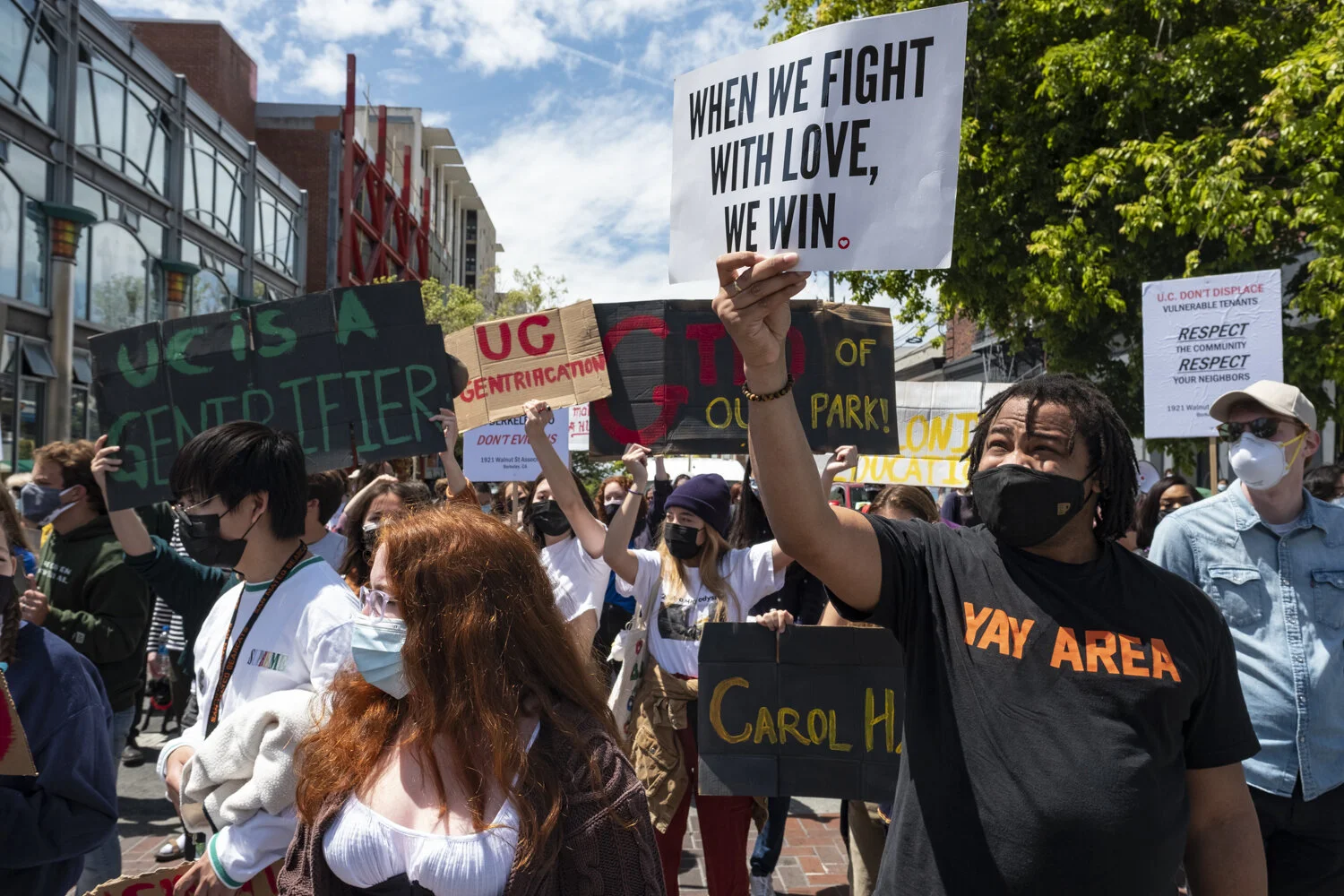
Support and approve more housing while intervening earlier when an eviction notice, building sale, publicly funded rehabilitation project, or UC decision places existing residents at risk of displacement.
Protect Public Land and Expand Usable Open Space
Measure whether public space is keeping pace with density, seek enforceable access and maintenance commitments where the City has authority, and publicly track every commitment connected to People's Park and other public land.
Make City Services Work Consistently
Track whether sidewalks, lighting, sanitation, accessibility, public restrooms, and other basic services are resolved durably and kept in working condition, not only whether a service request received an initial response.
Why the Existing Policy Direction Falls Short
Berkeley has useful housing, tenant-protection, public-works, and planning programs. Housing production is largely tracked by units, while tenant-stability programs operate through separate channels. Open space is usually evaluated within individual development proposals. Maintenance reporting emphasizes individual service requests.
Those systems record important work, but residents also need to know what happened afterward. City reporting should show whether residents stayed housed, affordable buildings were preserved, public-space commitments were met, and recurring street problems were permanently fixed.
In Contrast
Other candidates propose more studies, task forces, dashboards, a student-homeowner barter arrangement, a UC dining scholarship, and education or trade-school programs that depend on institutions outside City Hall. These proposals do not establish when City government must act, which department is responsible, how the work would be funded, or what residents could measure afterward.
My platform begins with what City government can actually do and the point at which it should act.
An eviction notice should trigger an offer of housing-retention assistance.
A vulnerable occupied building offered for sale should trigger preservation outreach and acquisition review.
Publicly funded rehabilitation should carry protections for existing tenants.
Major public investment should trigger an anti-displacement assessment.
A missed service deadline should trigger public notice and departmental follow-up.
A dashboard is useful after government has decided what it is responsible for doing. My recommendations begin by defining that responsibility.
-
Where We Are Now
Berkeley approves housing and operates tenant-protection, inspection, rental-assistance, and affordable-housing programs. These tools are spread across different departments and organizations. Residents often have to locate each program themselves after rent debt, an eviction notice, a building sale, or unsafe conditions have already become urgent.
New housing is necessary, but it does not automatically preserve the lower-rent apartment someone occupies today. Southside needs housing production and a system for keeping existing residents housed.
Why the Existing Direction Does Not Solve It
Berkeley's current direction supports additional supply and faster approvals while operating tenant counseling, housing-retention, inspection, and affordable-housing programs through separate channels. Residents must navigate several programs that do not present one clearly documented prevention pathway. Even with existing notice and assistance programs, a renter may still have to connect themselves to the right service after displacement risk becomes urgent.
My recommendations link assistance to specific events, including an eviction notice, the sale of an occupied building, and publicly funded rehabilitation. New housing remains necessary, but production is paired with early intervention, preservation, and enforceable tenant protections.
Campaign Proposal #1: Eviction Notice to Housing Retention
What needs to be done: Berkeley landlords must file covered eviction notices and lawsuits with the Rent Board. The City should use this existing requirement to make a privacy-protective offer of Rent Board counseling, legal-services referral, benefits screening, and Housing Retention assistance before displacement occurs.
What I will do: I will introduce a Council referral asking the Housing Department to coordinate with the independently elected Rent Board and contracted legal-service providers on the referral process. I will ask Council to require public review of consent, privacy, and data-retention rules before implementation.
How the public can measure progress: Households offered assistance, assistance accepted, evictions prevented, and housing retained after six and twelve months.
Campaign Proposal #2: Southside Acquisition and Preservation Track
What needs to be done: Berkeley's Small Sites Program should include a dedicated Southside preservation track. Community land trusts, nonprofit housing organizations, and cooperative-housing partners should be ready to evaluate occupied small apartment buildings before a sale, demolition, or major rent turnover removes existing affordability.
What I will do: I will introduce a budget referral for the preservation track, propose revisions to Housing Trust Fund program guidelines, and ask the Housing Department to establish a prequalified list of acquisition partners and a clear review timeline.
How the public can measure progress: Properties reviewed, occupied homes preserved, residents remaining in place, acquisition time, public cost per permanently affordable home, and preserved rent compared with market rent.
Campaign Proposal #3: Healthy Homes With Tenant Protections
What needs to be done: City-supported seismic work, mold and lead remediation, ventilation improvements, and accessibility repairs should make homes safer without becoming a reason to remove existing tenants. Where the funding source allows it, substantial public rehabilitation assistance should carry temporary-relocation support, a right to return, limits on passing subsidized costs to tenants, and an affordability period.
What I will do: I will propose a joint program design process involving Housing, Building and Safety, Public Health, and the Rent Board. I will request a legal and funding review before conditions are attached, then bring eligible funding and program changes through the Council budget and approval process.
How the public can measure progress: Hazards corrected, tenants returning after repairs, rent changes following subsidized work, affordability periods created, and unresolved repeat violations.
Campaign Proposal #4: UC Housing Impact Report and Agreement
What needs to be done: Berkeley needs an annual analysis of how UC Berkeley's enrollment, campus beds, master leasing, and land decisions affect the Southside rental market. Council should adopt public priorities for future City-UC agreements, environmental review, infrastructure coordination, and requests for institutional contributions.
What I will do: I will request a City Manager report and a public Council hearing, then introduce a resolution establishing the City's negotiating priorities. Because the City cannot command UC enrollment or campus land use, I will use public reporting, environmental review participation, and negotiated commitments to pursue the City's goals.
How the public can measure progress: Campus beds compared with enrollment, affordable and cooperative student beds supported, UC contributions to neighborhood systems, commitments made, and commitments completed.
-
Where We Are Now
Southside is one of Berkeley's densest neighborhoods, but new housing and institutional growth have not produced a comparable expansion of usable public open space. Public discussion often treats open space as a design feature inside a development rather than civic infrastructure that must remain accessible, maintained, and usable over time.
People's Park represents the larger governing question: who decides what public land is for, what public benefit must be protected, and what happens when institutional priorities conflict with neighborhood needs?
Why the Existing Direction Does Not Solve It
Berkeley's development process generally evaluates open space within each project. State density-bonus law can also require waivers of local standards for a qualifying housing project. At 2455 Telegraph Avenue, the 2026 staff report shows 1,921 square feet of usable open space where 3,112 square feet would otherwise be required, and 75 square feet of landscaped area where 1,245 square feet would otherwise be required. Both reductions were treated as compliant through density-bonus waivers.
That is not an argument against housing. It shows why project approval alone does not ensure that public space keeps pace with density. Southside has no clear district-level accounting of usable public space, cumulative demand, access, and maintenance. My recommendations create that accounting and use it to guide capital planning and City-UC negotiations.
Commitment 1 :District 7 Public Space Capacity Plan
What needs to be done: District 7 needs a public inventory of parks, plazas, gardens, public restrooms, seating, tree cover, publicly accessible paths, and indoor civic space. The inventory should measure actual access, hours, maintenance responsibility, disability access, and usable space per resident.
What I will do: I will introduce a referral directing Planning and Parks staff to coordinate the inventory with Public Works, the Disability Commission, and community review. I will use the findings to propose capital projects, budget priorities, and City-UC negotiating positions.
How the public can measure progress: Usable public space per resident, access hours, restroom availability, tree cover, maintenance backlog, funded improvements, and identified acquisition opportunities.
Commitment 2: Public-Benefit Review Before Land Conversion
What needs to be done: Before the City sells, leases, or converts major public land, residents should receive a written analysis of the current public use, proposed use, alternatives, environmental effects, public access, maintenance obligations, and long-term public benefit. Irreversible decisions should receive the strongest public-review and voter-approval requirements allowed by law.
What I will do: I will request a City Attorney review of the City's available ordinance and charter authority. I will introduce the strongest legally supportable public-review requirement and seek published findings before casting my vote on a covered land decision.
How the public can measure progress: Covered land decisions reviewed, alternatives evaluated, public comments answered, public access preserved, and replacement space secured before conversion where required.
Commitment 3: Enforceable Public Access and Maintenance
What needs to be done: Publicly accessible space created through a development agreement or City partnership should have written hours, access rules, responsible maintenance parties, enforcement procedures, and long-term funding. A landscaped area that is closed, difficult to enter, or poorly maintained should not be counted as a public-space benefit.
What I will do: I will introduce a referral asking the City Manager and City Attorney to draft standard public-access and maintenance terms for City agreements. Where the City has authority, I will make those terms a condition of my support for an agreement and request follow-up when a commitment is not met.
How the public can measure progress: Promised access hours delivered, maintenance inspections completed, accessibility problems resolved, complaints answered, and agreement violations corrected.
Commitment 4: People's Park Public Accountability
What needs to be done: Every public commitment connected to People's Park should be documented and measured, including meaningful public access, ecological restoration, community-serving open space, public health commitments, and neighborhood mitigation. The City does not control UC land, but it can maintain a public record and adopt clear City positions.
What I will do: I will request regular City-UC reporting and public hearings, submit written comments through environmental and planning processes, and introduce written Council positions on access, open space, public health, and neighborhood mitigation. My office will publish the commitments and their status in one place.
How the public can measure progress: Publicly accessible acreage, access hours, trees and permeable land restored, community uses permitted, public-health commitments delivered, and overdue commitments identified.
-
Where We Are Now
Berkeley allows residents to report sidewalk hazards, streetlight outages, potholes, illegal dumping, graffiti, and other service problems through 311 and online tools. Public Works also publishes expected response times for several services. Residents still lack an easy district-level view of recurring problems, overdue requests, temporary fixes, and permanent completion.
Southside needs more than another way to submit a complaint. It needs follow-through residents can see.
Why the Existing Direction Does Not Solve It
Berkeley provides reporting portals and publishes expected response times for potholes, graffiti, illegal dumping, streetlights, and temporary sidewalk repairs. Current public reporting emphasizes individual requests more than recurring locations and permanent resolution.
Sidewalks show the gap. Property owners generally carry repair responsibility, the City offers a limited cost-sharing program, and Public Works may install a temporary make-safe repair. A request can therefore receive a response while the permanent repair remains unfinished. My proposal would show that distinction, assign the next responsible department, and bring repeated failures into Council oversight and the budget process.
Commitment 1: District 7 Service Standards Report
What needs to be done: District 7 needs a quarterly report comparing actual response times with the City's published service standards. It should identify overdue requests, repeated complaints at the same location, temporary repairs awaiting permanent work, and the department responsible for the next action.
What I will do: I will request aggregated 311 and Public Works data, establish consistent reporting fields with City staff, and publish the District 7 report through my Council office. I will bring persistent failures into Council oversight and the annual budget process.
How the public can measure progress: Median response time, requests completed within the published standard, overdue requests, repeat locations, and time from temporary repair to permanent completion.
Commitment 2: Southside Maintenance Map
What needs to be done: Southside needs a public map of sidewalk hazards, streetlight outages, potholes, trash hotspots, restroom availability, inaccessible construction routes, and scheduled capital work. The map should show status and the responsible department without exposing personal information about residents who filed reports.
What I will do: I will introduce a District 7 pilot referral asking the City Manager and Public Works to coordinate existing service-request and capital-project data. My office will review the map with residents and bring missing or stalled work back to the responsible department.
How the public can measure progress: Open problems by category, responsible department, completion time, repeat locations, temporary fixes awaiting permanent work, and planned work delivered on schedule.
Commitment 3: Growth Impact and Service Plan
What needs to be done: For major plans and projects where the City retains authority, staff reports should identify added demand on sidewalks, sanitation, transit access, public space, accessibility, and emergency services. They should state what mitigation is legally available, who will fund it, and when it will be delivered.
What I will do: I will introduce a Council referral establishing a standard service-impact section in applicable staff reports, development agreements, area plans, and budget decisions. I will ask the City Attorney to identify the City's authority so each condition is legally supportable and tied to evidence.
How the public can measure progress: Mitigation commitments adopted, responsible parties named, funding secured, delivery dates published, work completed, and service conditions measured before and after occupancy.
Commitment 4: Telegraph Basic Services Plan
What needs to be done: Telegraph needs one coordinated plan for lighting, sidewalk repair, sanitation, public restroom access, loading and delivery needs, accessible routes, and construction impacts. Residents and businesses should not have to navigate several departments separately to resolve one block's recurring conditions.
What I will do: I will introduce a City Manager referral assigning a lead department, request an existing-condition audit and public work schedule, and review funding and unfinished work during the annual budget process.
How the public can measure progress: Lighting outages, sidewalk hazards, restroom operating hours, sanitation complaints, accessibility interruptions, recurring locations, scheduled completion dates, and completed repairs.
-
Every commitment on this page will appear in a public promise tracker. Before Election Day, the tracker will identify the existing condition, the action available to a councilmember, and the result I am promising to pursue. If elected, my office will update the tracker at least quarterly.
For every major platform commitment, my office will publish:
the promise and the date it was made
the existing condition or baseline
the action within my office's authority
the responsible City department or outside institution
the Council action or budget decision required
the implementation status
the next public deadline
the measurable result
the Council action, agreement, or budget decision required
the action taken and supporting public record
the next deadline
the current status
the measurable indicator, target, or observable condition used to judge the result
any legal, fiscal, or administrative barrier delaying the work
Residents should not have to wait until the next election to learn whether a promise was implemented.
Tracker statuses will be: Proposed, Introduced, Adopted, Funded, In Progress, Completed, or Blocked. Completed will mean the stated material outcome was delivered. A referral, meeting, report, vote, or funding allocation will not by itself count as completion when the promise requires a further result.
Residents should not have to wait until the next election to learn whether a promise was attempted, funded, delayed, or completed.
Together, these priorities reflect a simple standard: growth should improve daily life for the people who already live, work, study, and build community in Southside. That means pairing new development with housing stability, public investment, accountable institutions, and neighborhood services residents can actually see and use.
What I Will Change and How I Will Do It
Voters deserve more than a list of things a candidate supports. A platform should explain what is failing, what policy would change it, how a councilmember would move that policy through City government, and what residents could measure afterward.
Southside is adding housing while many renters remain unable to afford a new apartment in the neighborhood. Public space has not grown with density. Residents can report broken sidewalks, streetlights, trash, and other problems, but it is difficult to see whether recurring problems are being resolved or simply closed in the reporting system.
My platform is built around specific points where City government can act: when a tenant receives an eviction notice, when an occupied building is offered for sale, when public money repairs rental housing, when development increases demand on neighborhood systems, and when a City department misses its published service standard.
Why the Existing Policy Direction Falls Short
Berkeley has useful housing, tenant-protection, public-works, and planning programs. Housing production is largely tracked by units, while tenant-stability programs operate through separate channels. Open space is usually evaluated within individual development proposals. Maintenance reporting emphasizes individual service requests.
Those systems record important work, but residents also need to know what happened afterward. City reporting should show whether residents stayed housed, affordable buildings were preserved, public-space commitments were met, and recurring street problems were permanently fixed.
The Difference in This Election
I have lived in Southside since 2016 and organized here since 2017, from People's Park and food distribution to housing and basic neighborhood maintenance. I am a UC Berkeley Political Science graduate, a former transfer student, and a former Vice Chair of Berkeley's Homeless Commission.
As a medical case manager, I work with people navigating systems that are fragmented, under-resourced, and difficult to access. That work requires more than giving someone a phone number. It requires identifying the actual problem, connecting the right services, following up, and staying involved until there is a stable outcome.
Housing policy needs the same discipline. When a resident is at risk of losing their home, responsibility should not disappear between the Rent Board, Housing Department, property owner, legal-services provider, and nonprofit housing system. City government should have a clear process, a responsible department, and a measurable outcome.
My experience on the Homeless Commission also taught me how to move policy through City government while staying grounded in the people most affected. I authored and advanced the People's First Sanctuary Encampment proposal, which paired immediate protections with sanitation, health services, and a defined City response. I understand the difference between announcing a value and building a process capable of carrying it out.
Other candidates propose more studies, task forces, dashboards, a student-homeowner barter arrangement, a UC dining scholarship, and education or trade-school programs that depend on institutions outside City Hall. These proposals do not establish when City government must act, which department is responsible, how the work would be funded, or what residents could measure afterward.
I agree with some of those goals. My platform places particular emphasis on defined intervention points and what City government should do next.
An eviction notice should trigger an offer of housing-retention assistance
A vulnerable occupied building offered for sale should trigger preservation outreach and acquisition review.
Publicly funded rehabilitation should carry protections for existing tenants.
Major public investment should trigger an anti-displacement assessment.
A missed service deadline should trigger public notice and departmental follow-up.
A dashboard is useful after government has decided what it is responsible for doing. My recommendations begin by defining that responsibility.
Help Make These Commitments Real
This is the starting point for Aidan Hill’s District 7 platform: a commitment to housing stability, public space, basic services, and accountable growth in Southside.
As the campaign unfolds, Aidan will release more detailed plans on housing, public land, neighborhood services, infrastructure, safety, and government accountability. The goal is simple: turn growth into real benefits for the people who live, work, study, and build community here.
-
Description text goes here