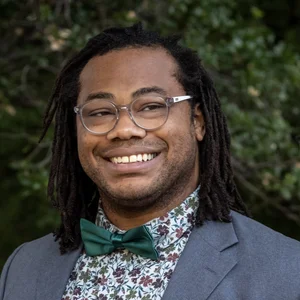
Who Decides the Future of Telegraph Avenue?
Every morning, before most of Berkeley is fully awake, crews are already out on Telegraph Avenue picking up litter, removing graffiti, reporting hazards, and checking in with local businesses. Most residents never see that work, but they notice when it doesn’t happen.
This week, I met with the Telegraph Ambassador team to learn what they’re seeing on the ground and what City Hall can do to better support them.
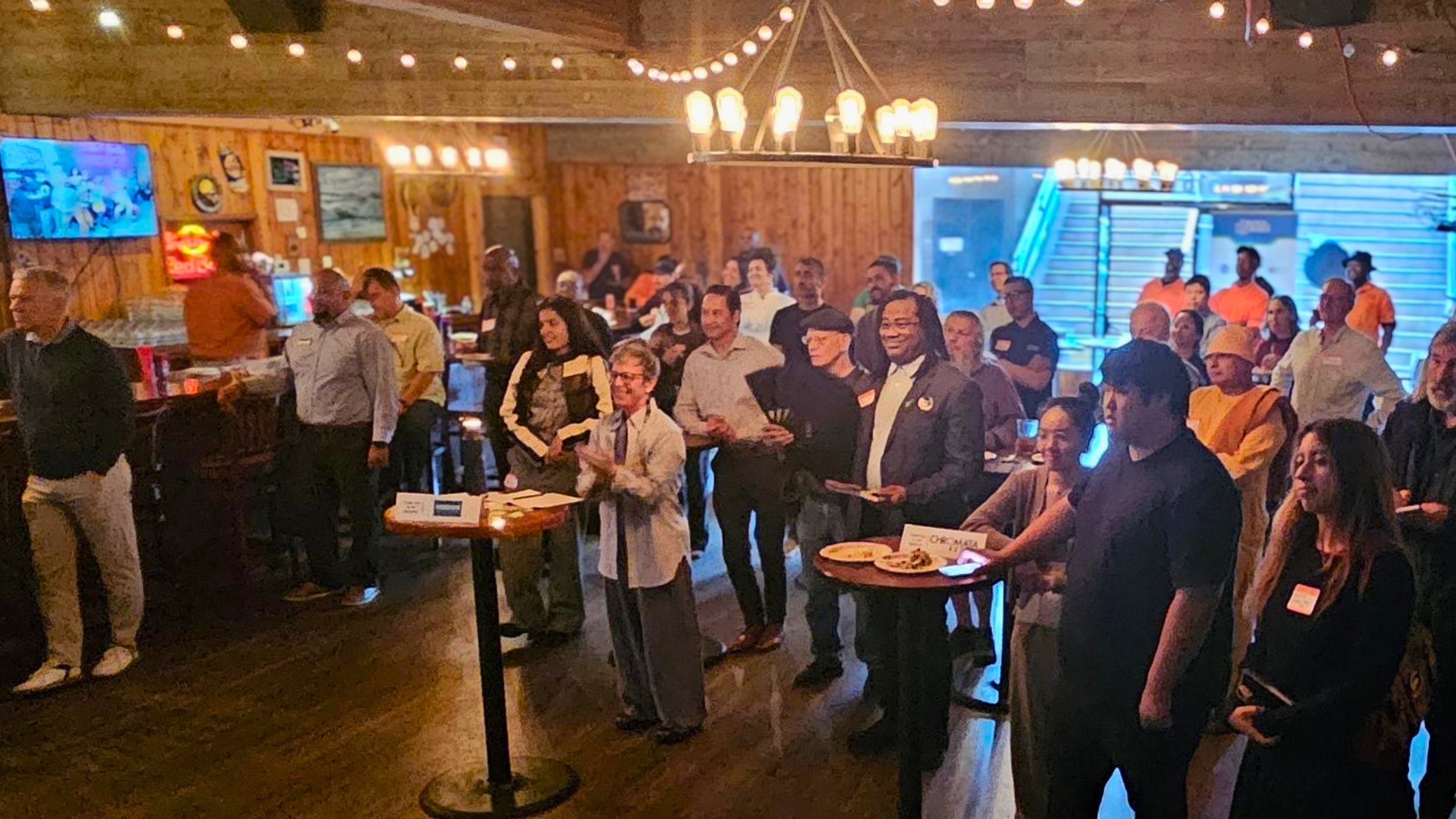
TBID Annual Meeting
A full room at The Tap Haus for the Telegraph BID annual meeting. This is the work of Southside: merchants, workers, neighbors, and service teams in the same room, talking about what Telegraph needs to function every day.
Who decides the future of Telegraph? The answer should begin with the people who open storefronts, clean the sidewalks, staff the restaurants, serve students and neighbors, and notice problems before they become City Hall agenda items.
Telegraph's future is not abstract. It shows up every day in the condition of the sidewalks, whether the public restroom is working, whether small businesses can stay open, whether people feel safe crossing the street, and whether City Hall treats Southside as a real neighborhood instead of a place to pass through.
What matters now is whether the City can turn public plans into reliable daily follow-through.
What I Learned Walking Telegraph
Businesses succeed when the basics work. Sidewalks are clean before customers arrive. Graffiti is removed quickly. Lighting works. Public spaces feel cared for. Visitors know where to go. Small problems are addressed before they become expensive ones.
That is what I heard from the Telegraph Ambassador team.
The people walking the corridor every day are not asking for dramatic interventions. They are asking for dependable partnership. They know that a welcoming commercial district is built through hundreds of small actions repeated consistently over time.
Consistency
Telegraph’s biggest challenge is not a lack of investment. It’s inconsistent maintenance.
Business owners can manage competition and changing markets, but they cannot predict whether graffiti will be removed quickly, overflowing trash will be collected, or visitors will arrive to a corridor that feels cared for. Walking Telegraph with the Ambassador team made that clear. The condition of the street changes block by block and day by day.
That inconsistency affects customer confidence. When people perceive a commercial district as neglected, they spend less time there, visit fewer businesses, and are less likely to return. Small maintenance problems become economic problems.
Coordination
Telegraph needs better coordination between the people maintaining the corridor and the City departments responsible for responding.
The Ambassador team sees problems first because they are on the street every day. They notice broken lighting, overflowing trash, graffiti, damaged sidewalks, and businesses that need assistance. Too often, solving those issues depends on navigating multiple departments with different timelines and priorities.
For small businesses, delays have real costs. Every day a storefront sits behind graffiti, every week a maintenance request goes unanswered, or every month public space feels neglected makes it harder to attract customers and build confidence in the district.
Stewardship
Telegraph needs steady stewardship, not periodic attention.
There is no single project that will determine whether Telegraph succeeds over the next decade. Success depends on whether the corridor is clean, welcoming, well-lit, easy to navigate, and actively managed every week of the year. The work of the Telegraph Ambassadors demonstrates that these day-to-day improvements shape how residents, students, visitors, and business owners experience the neighborhood.
Businesses depend on trust. Customers return to places that feel safe, cared for, and active. When the public realm is maintained consistently, private investment follows. When it isn’t, vacancies increase, foot traffic declines, and the burden of maintaining the district shifts onto individual merchants instead of being shared as a public responsibility.
The Public Record Confirms What We Heard
The public records tell a clear story.
TBID’s proposed FY27 budget includes about $1.03 million in revenue, with about $687,000 budgeted for maintenance. The City is also funding a $100,000 contract for the 24/7 Channing public restroom and a $49,139 Public Commons for Everyone Initiative grant.
TBID FY27 Budget Priorities
Two-thirds of TBID FY27 expenses are budgeted for maintenance, the daily public-realm work businesses rely on.
Total FY27 expenses: $1,028,534
Source: City of Berkeley TBID FY27 City Council report, June 9, 2026.
That matters because Telegraph needs daily operational capacity. Cleaning, Ambassador services, restroom operations, trash response, graffiti removal, planters, lighting, and public space care are not side issues. They are part of whether a neighborhood functions.
The City’s economic dashboard shows the same pressure from another angle. Telegraph’s ground-floor commercial vacancy rose to 10.5% in 2025, while the citywide vacancy rate fell to 6.3%. That means Telegraph is moving in the wrong direction while much of the rest of the city is improving.
Telegraph Vacancy Is Moving the Wrong Direction
Ground-floor commercial vacancy rates by square footage, 2021 to 2025.
2025 gap: 4.2 percentage points
In 2025, Telegraph's ground-floor vacancy rate was 10.5%, compared with 6.3% citywide.
Source: City of Berkeley Office of Economic Development, 2025 Economic Dashboard.
Safer Crossings Are Business Infrastructure
City traffic safety data identifies Telegraph as a high-collision corridor. Safer crossings are basic economic infrastructure.
Source: BPD Traffic Safety Hub and City Council Agenda and Rules Committee Packet, January 12, 2026.
The City’s traffic safety data also lists Telegraph as a high-collision corridor. For a neighborhood with students, workers, visitors, seniors, cyclists, unhoused residents, delivery drivers, and nightlife all sharing the same streets, that should be treated as a basic governance issue.
This is the work: clean sidewalks, working restrooms, safer crossings, stable storefronts, public data, and accountability.
What I Will Do
As a candidate for District 7, I believe the City’s role is to strengthen that work. That means investing in the people and programs that already improve Telegraph every day, coordinating departments more effectively, and making sure businesses have a City Hall that responds before issues become crises.
A stable, active Telegraph Avenue is not just good for merchants. It’s good for students looking for places to gather, workers commuting through Southside, neighbors who want safe and active streets, and everyone who believes Berkeley’s commercial districts deserve steady stewardship rather than occasional attention.
The future of Telegraph will be shaped less by one big project than by whether we commit to doing the basics well, every single day.
Build a City Hall that Follows Through
If I’m elected, one of my priorities will be making sure Telegraph’s basic services are treated as essential economic infrastructure, not afterthoughts. Graffiti removal, trash collection, lighting repairs, sidewalk maintenance, and ambassador reports shouldn’t disappear into separate departmental silos. Businesses deserve to know who is responsible, what the response timeline is, and whether the work has been completed.
I’ve spent time with the people maintaining Telegraph because I want to understand where the system breaks down before I start proposing solutions. Good government starts by listening to the people doing the work every day.
Make City Government Easier to Work With
One thing I heard repeatedly is that business owners often don’t know who to call, and even when they do, they end up navigating multiple departments for what feels like one problem. That’s something the City can improve.
As your Councilmember, I want District 7 businesses to spend less time chasing City Hall and more time serving customers. That means improving coordination across departments, following up on outstanding requests, and making sure recurring problems are addressed systematically instead of one complaint at a time.
Government should reduce friction, not create it.
Measure Success by What People Experience
I don’t think Telegraph needs another report that sits on a shelf. It needs a Councilmember who pays attention to whether the corridor is actually improving week after week.
I’ll judge progress by questions that matter to the people who live and work here. Are sidewalks cleaner? Are maintenance requests being resolved faster? Are businesses seeing more foot traffic because the public space feels welcoming? Are the Ambassador team and City staff working together effectively?
Accountability Scorecard
Cleaner sidewalks
Faster maintenance response
Working restroom access
Lower vacancy
Safer crossings
Those are the everyday measures that determine whether a commercial district succeeds. If we get those fundamentals right consistently, businesses have a stronger foundation to invest, hire, and grow.
What Happens If We Act
If Berkeley gets this right, the difference won’t be measured by a ribbon cutting. It’ll be measured by whether businesses decide to renew their lease.
A café owner opens the front door at 7 a.m. and doesn’t have to spend the first thirty minutes sweeping around overflowing trash, washing graffiti off the storefront, or calling three different City departments about a broken light that still hasn’t been fixed. Customers feel comfortable walking down Telegraph at night. Parents decide to eat on the avenue after visiting campus. Students stay for dinner instead of ordering delivery. More people walking the street means more customers walking through the door.
If we keep drifting, the costs don’t show up in one dramatic moment. They show up one month at a time.
A customer decides not to come back because the block feels neglected. A retailer loses an evening’s sales because people choose another commercial district. A restaurant owner spends another weekend dealing with problems that shouldn’t be their responsibility. When the lease comes up for renewal, they decide it’s no longer worth the risk.
That’s how commercial districts decline. Not because one big thing goes wrong, but because running a business becomes just a little harder every month until someone decides to close the doors.
I don’t want Telegraph’s business owners spending their energy compensating for City Hall. I want them spending it serving customers, hiring employees, and building the kind of neighborhood businesses that make Telegraph a destination.
Why This Is Personal
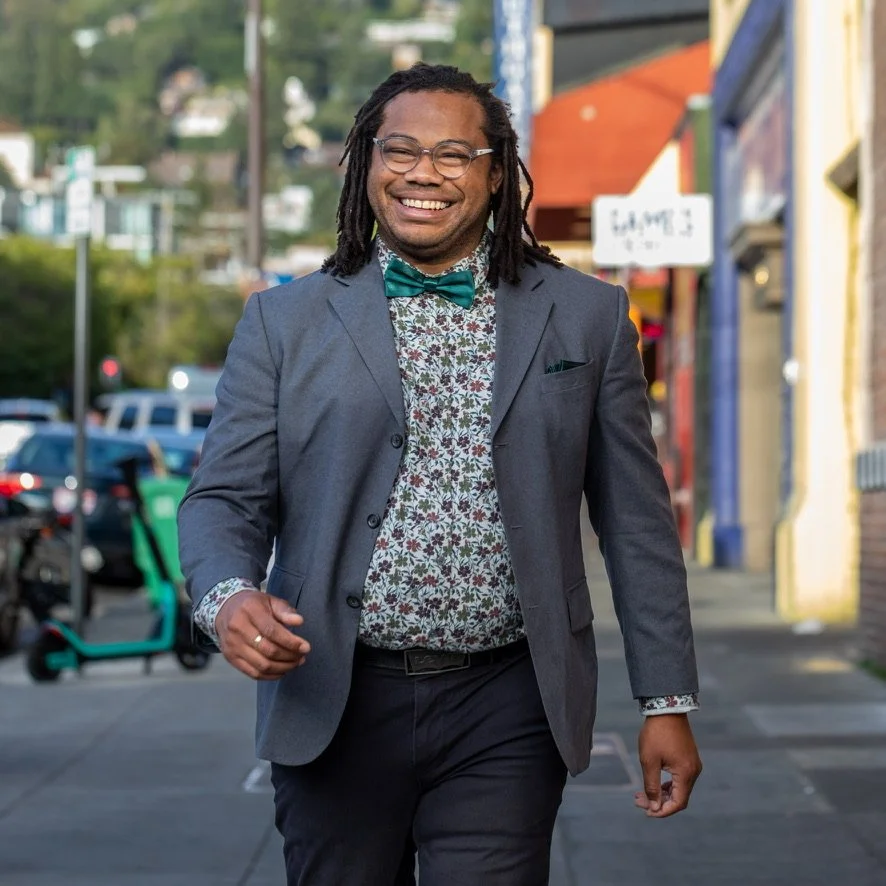
Aidan Hill walking on Durant Avenue in Berkeley’s Southside, smiling while visiting local businesses during their District 7 City Council campaign.
I know this neighborhood because I live here. I have organized here, fed people here, studied here, walked these sidewalks for years, and watched how City, UC Berkeley, and private decisions land on the same blocks.
I am ready to lead with the community I know.
My platform is simple: fix and stabilize Berkeley while it grows. On Telegraph, that means working with the people already doing the work and making sure public systems meet the actual needs of the corridor.
I’ve been walking Telegraph for a long time. Long before I decided to run for City Council, this was where I met neighbors, supported local businesses, volunteered, and built friendships with people who care deeply about this community.
That’s why this campaign feels personal to me.
When I talk with merchants, the Telegraph Ambassadors, or the people opening their doors every morning, I’m not introducing myself for the first time. We’re continuing conversations we’ve been having for years about what this neighborhood needs to function, stabilize, and keep its character.
Telegraph deserves a Councilmember who measures success the same way business owners do: by whether the street is cleaner, customers feel welcome, maintenance requests get resolved, and local businesses are able to stay open. I want City Hall to become a dependable partner for the people who invest their time, money, and livelihoods here every day.
If I’m elected, that won’t change. You’ll continue to see me on Telegraph, listening, checking in, bringing concerns directly into the budget and policy process, and following up until problems are actually resolved. My commitment isn’t just to cast votes at Council meetings. It’s to stay present, keep showing up, answer the phone, and earn your trust over time.
Now I’m asking for your help.
If you believe Telegraph deserves that kind of representation, join this campaign. Put a window sign in your business. Display a yard sign at your home. Hand out flyers to your neighbors. Volunteer for a canvass. Tell people why Southside matters and why local businesses deserve a City Hall that works alongside them.
This campaign isn’t being built by consultants or outside interests. It’s being built by the people who already call Berkeley home.
Let’s build a grassroots campaign that’s truly Berkeley for Berkeley.
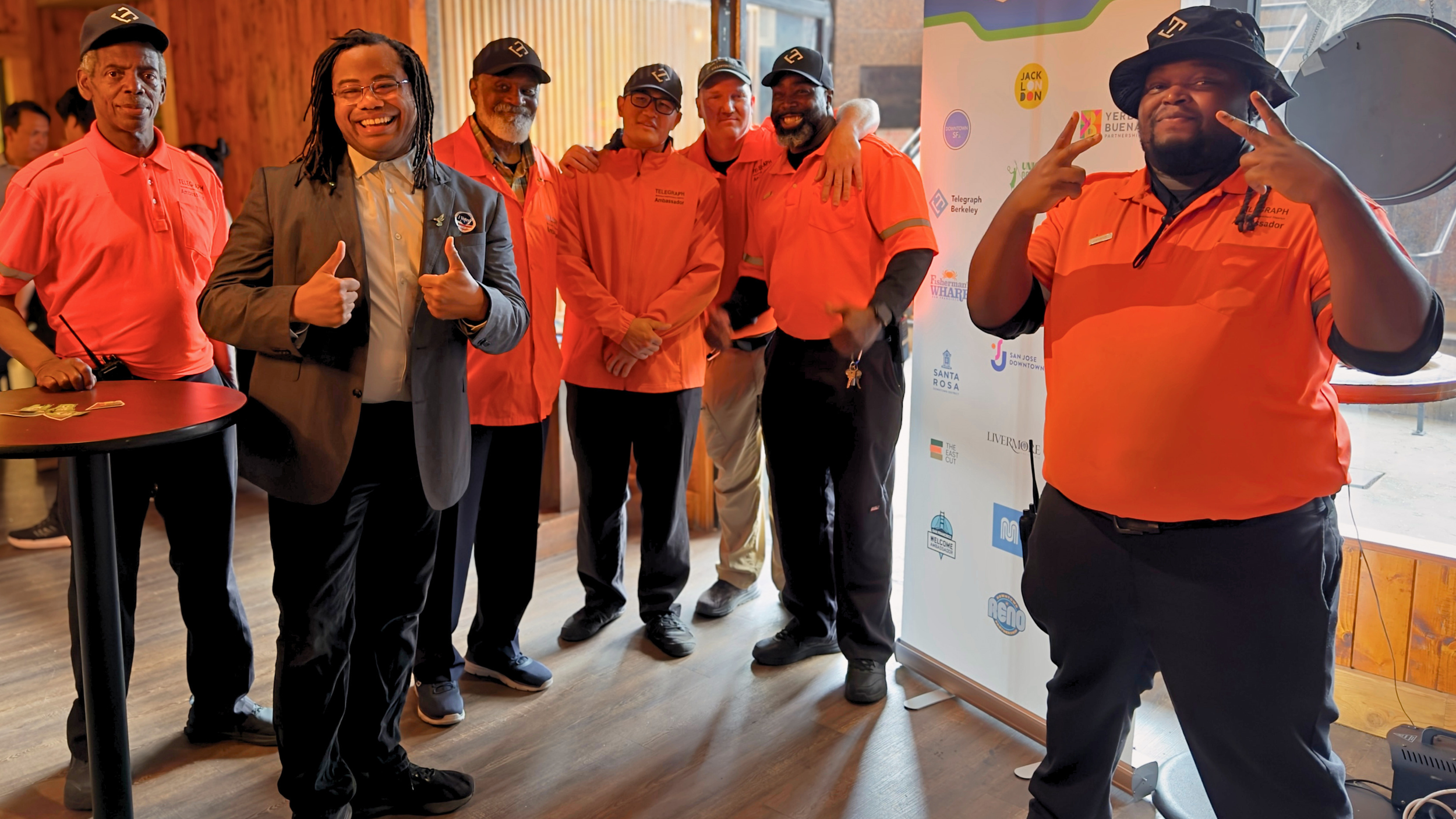
With the Telegraph Ambassadors after the TBID annual meeting. These are the people doing the visible daily work on the corridor: cleaning, answering questions, supporting safety, and helping keep Telegraph usable for everyone.